
The HOMO idea
An HOA alternative.
Not a neighborhood free-for-all.
HOMO draws a clean line: maintain what people genuinely share without turning ordinary private choices into committee business. Existing obligations do not disappear because a better idea has a better name.
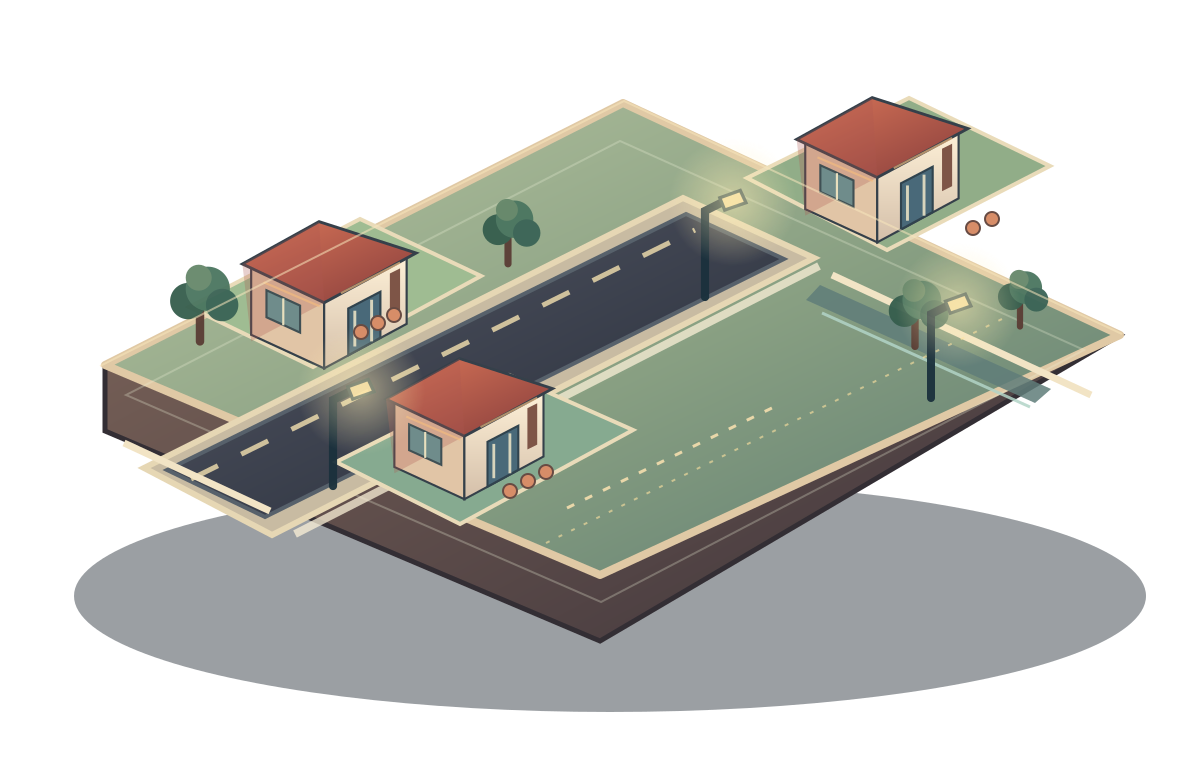
The block, in one view
Own the home.
Share the upkeep.
The road, lights, and drainage cross property lines. A preference about someone else's garden does not. The drawing is a way to discuss scope, not a claim that current rules disappear.
Four directions a neighborhood can explore.
- 01
Improve the current HOA
Focus leadership on budgets, maintenance, transparency, and consistent process.
- 02
Narrow the restrictions
Keep rules tied to genuine shared interests and retire recreational micromanagement.
- 03
Coordinate shared work
Organize only the road, light, drainage, entrance, or service people truly share.
- 04
Dissolve or replace the HOA
Start with ownership, debt, insurance, approvals, and what happens the day after.
Shared work is still real work.
A private road still needs maintenance. Drainage still needs an accountable owner. An entrance light still needs power. “No HOA” is not a maintenance plan; it is only a position on the current structure.
What if the only shared job is drainage?
A shared ditch, culvert, or retention pond needs a maintenance plan. It does not need a flowerpot committee. If you are looking for options other than an HOA for a shared drainage area, start with the job and the documents before choosing a new structure.
- Ownership and responsibility: Check the recorded plat, deeds, easements, maintenance agreements, and covenants. Who owns the land, who must maintain the drainage, and who must pay? Those may be different parties. Ask the local stormwater or public works office what records and requirements apply.
- Repairs and access: Identify who inspects the system, hires contractors, authorizes emergency repairs, and can enter the land to do the work. Check insurance needs with a qualified professional.
- Contributions and future costs: Set out how costs are allocated, collected, and recorded, including routine upkeep, major repairs, and replacement. A voluntary collection is not a reliable substitute for an existing payment obligation.
- Changing the arrangement: Ask a qualified local attorney whether a focused maintenance agreement or a narrower existing association could fit, and what owner, lender, or government approvals and recorded-document changes would be needed. Do not assume a neighborhood vote transfers duties or dissolves the HOA.
Keep the scope tied to drainage, with clear responsibility and a workable budget. Before replacing an association, use the HOA dissolution checklist to identify obligations that would still need an owner.
Private life is not a maintenance category.
Personal style, lawful home use, and ordinary family life should not become neighborhood projects without a genuine shared reason and actual authority. That is HOMO’s reform position, not a claim that current restrictions are automatically unenforceable.
Ask the clarifying question.
“Is the problem the shared service or the unnecessary control attached to it?” The answer tells you whether to improve the current system, narrow it, or investigate a different one.
Private plants stay private. Common-area hedges are the only plants on the agenda.
Answers
Can a voluntary group replace mandatory HOA membership?
Not simply by choosing a new name. Explore what lawful process would actually change the obligation.
Is HOMO a management company?
No. It is an independent, early-stage civic project with public guides and a narrower-governance idea.
Will an alternative eliminate all neighborhood costs?
No promise like that is made. Shared assets, insurance, and services can still cost real money.